Archive for July, 2008

ADHD, Creativity and Intelligence

Wednesday, July 30th, 2008

There are many who believe that there is a positive relationship between ADHD and creativity and ADHD and high intelligence. Unfortunately, research does not support this belief. There are brilliant people with ADHD and also retarded ones. Some are artistically or creatively gifted, and others are not. ADHD is a disorder and not an advantage. The good news is that we are becoming progressively more successful treating ADHD. With good treatment, ADHD does not need to interfere with relationships, occupational success, or overall life quality.

ADHD, Impulsivity and Consequences Part 2

Tuesday, July 29th, 2008

Dr. C: You’re trying, and you’re doing better.

Elwood: Thank you, Dr C. Do you have other thing I could do to…control my impulsivity?

Dr. C: You could count to ten.

Elwood: Count to ten!?

♪You need to count to ten and do some thinking then
You won’t act without thinking again
You need to have a plan and practice when you can
Yes, don’t act without thinking again
You need to slow yourself down
You need to smile, not frown
And you’ll stay out of trouble when
You think before you act, you use a little tact
You don’t act without thinking again

Elwood: Well…what’s this count to ten stuff?

Dr. C: Sometimes it helps to count to ten, or twenty or even to a hundred, since that gives you time to settle down and think before you act.

Elwood: And…what’s this have a plan and practice when you can?

Dr. C: The first part is pick out a problem that happens over and over, again.

Elwood: Like me getting teased and then hitting.

Dr. C: Right. Next come up with a plan of what you’re going to do next time you get teased.

Elwood: Uh, a plan…Let me think here…I’ll, I’ll walk away, and ignore it.

Dr. C: Very good, Elwood. The third part is to practice. Go home and have your parents pretend to tease you.

Elwood: I don’t know if I’d like my parents to tease me…

Dr. C: It’s just for pretend. The more that you practice the easier it will be for you to walk away when you get teased for real.

Elwood: I still don’t understand.

Dr. C: When I was a little boy…

Elwood: Now we’re really talking ancient history!

Dr. C: …As I was saying before you interrupted me, when I was a little boy, my plan was to say to myself, “Sticks and stones can break my bones, but name can never hurt me.”

Elwood: But names do hurt me. What I say is, “Whatever you say bounces off me and sticks to you.”

Dr. C: That’s the same kind of idea.

Elwood: But sometimes I get in more trouble when I say that.

Dr. C: The trick is to say it to yourself, and then you won’t get into trouble.

Elwood: You mean I should talk to myself?

Dr. C: Right. Talking to yourself gives you time to think.

Elwood: I thought that talking to yourself was weird, Dr. C.

Dr. C: Talking to your self is not weird. It gives you time to settle down, and think before you act.

Elwood: And when you calm down and think, you don’t act so impulsively.

Dr. C: Very good, Elwood! Now I want to show you my impulsive toy.

Elwood: You have toys that have ADHD?

Dr. C: Not exactly, Elwood. (Dr C picks up stacked ball toy) Watch carefully. This happens very quickly. (drops the toy)

Elwood: Wow! That happened really fast, Dr C.

Dr. C: It happens so fast that they could hit you in the eye.

Elwood: I get in trouble if I hit anybody in the eye.

Dr. C: That’s why impulsivity is so dangerous because it happens quickly. Now, (Picks up another toy) this one takes time before it jumps. (Sets toy down on table, waits.)

Elwood: It hasn’t even jumped yet.

Dr. C: Because it takes more time. It’s not as dangerous.

Elwood: And we have time to get away. So it doesn’t hit us in the eyes!

Dr. C: Just like with the toy, if we take time to think before we act, calm down and talk to ourselves, we don’t get in as much trouble.

Elwood: I understand, Dr. C. (Toy pops into the air) There it went! Wow! It did take more time. Do you ever get in trouble for acting impulsively, Dr. C?

Dr. C: Everybody gets in trouble for being impulsive, sometime

Elwood: What have you dome that was impulsive?

Dr. C: One day, I was driving down the street with my wife and I saw this sign that said, “Lizard sale”.

Elwood: Wow! I like lizards.

Dr. C: That’s what I said, too. I told my wife, “Let’s stop and buy ourselves a lizard.” And she said, “Don’t buy a lizard”. And I said, “No, I want a lizard!” So we went into the store…

Elwood: And did they have lizards there?

Dr. C: Yes, they did. And I saw this giant monitor lizard, and bought it.

Elwood: Why is that impulsive, Dr. C?

Dr. C: Because, I acted fast without thinking first about how to take care of the lizard.

Elwood: What is there to know?

Dr. C: You have to know what to feed it, what kind of environment to put it in whether it’s healthy or sick and finally, whether or not it’s dangerous.

Elwood: Lizards aren’t dangerous!

Dr. C: That’s what I thought, but I found out differently.

Elwood: How did you find that out?

Dr. C: Two ways! First of all, I talked to a man at a pet store, and he told me that the lizard was dangerous. Secondly, I bought a little lizard leash to take the lizard for a walk, and one day I put the leash on the lizard, but the lizard didn’t want to go for a walk.

Elwood: So, what did he do?

Dr. C: He started biting everything in sight. He bit the leg on my chair so hard, that he broke off one of his teeth.

Elwood: What did you do?

Dr. C: I picked him up, put him back in his cage and sold him to somebody else who knew more about taking care of lizards.

Elwood: So, you made a mistake. You acted impulsively.

Dr. C: Everybody makes mistakes, sometimes.

Elwood: That reminds me of one of your songs

(Scene changes to Dr C making mistakes with song playing)

♪Even Dr C, you see
Makes mistakes like you and me
Sometimes though we really try
We make mistakes and don’t know why
Brothers and sisters, Mom, and Dad
Sometimes mess up and feel bad
We all goof up from time to time
So don’t forget our little rhyme

Elwood: ♪“We all goof up from time to time So don’t forget our little rhyme”  Is it time for us to stop, Dr C? I want to go home, so my parents can practice teasing me!

Dr. C: (Chuckling,) Elwood! Before we stop, why don’t you tell me what you learned today?

Elwood: I learned that alternatives mean other things you can do besides hitting or fighting.

Dr. C: Very good.

Elwood: And I learned that impulsivity can get you in a lot of trouble. You need to slow yourself down, count to ten, have a plan and talk to yourself.

Dr. C: Very good. Anything else?

Elwood: Yes, Dr C. I learned that lovely large lizards sure don’t like little lizard leashes.

Dr. C: No doubt about that, Elwood! No doubt about it.

To purchase the video, go to www.adhd1.net/adhd-dvd.htm

ADHD, Impulsivity and Consequences Part 1

Tuesday, July 29th, 2008

Roy: You cheated.

Elwood: You’re the cheater.

Roy: You’re a liar!

Elwood: You’re the liar.

Roy: You’re stupid.

Elwood: You’re a dummy.

Roy: Naaa!

Elwood: Don’t make a face at me.

Roy: Come on, Elwood, let’s fight.

Elwood: I’m gonna tell…

(Scene opens to Dr. C and Elwood)

Elwood: …and that’s exactly what happened, Dr. C. Roy got into a lot of trouble for doing something so wrong! I got I trouble, too, for calling names.

Dr. C: Well, the good news, Elwood, is that you told the teacher, and you didn’t hit. The bad news is you helped to make a small problem into a bigger problem.

Elwood: How did I do that, Dr. C?

Dr. C: You did it by calling names, and arguing. It’s just like my magic chain. (Pick up chain) You can take a little problem and make it into a big problem. But the good news is you can also take a big problem, and shrink it down into a little problem.

Elwood:I get it! I get it!

Dr. C: Now, I want you to imagine a way you could have handled your problem without making it bigger.

Elwood: (looks away) Hmmm. Let me think.

(flashback to Roy and Elwood)

Roy: You cheated.

Elwood: No, I didn’t.

Roy: Yes, you did.

Elwood: No, I didn’t, but if that’s how you feel, may be we just shouldn’t play together any more

Roy: Fine by me!

Elwood: Fine by me, too.

(dissolve back to Dr. C & Elwood)

Dr. C: That would have been better, Elwood.

Elwood: And I wouldn’t have gotten in trouble, either.

Dr. C: Right. Can you think of another way you could have handled the problem?

Elwood: Let me see…Aah,. Well, we could have talked about what he thought I was doing wrong, and maybe solved the problem, and kept right on playing. Who knows, maybe I was doing something wrong.

Dr. C: I can tell that you’re really trying to act less impulsively.

Elwood: (sings) “When you act without thinking that’s impulsivity, which is the very final part of ADHD!”

Dr. C: Impulsivity is acting fast without thinking first about alternatives or consequences.

Elwood: We already talked about quinsecuansis.

Dr. C: Consequences, Elwood.

Elwood: That what I said, quinsecuansis. Quinsecuansis is what happens after you do something. But what are alternatives?

Dr. C: Alternatives means choices. You had a lot of choices available of what to do in your problem with Roy.

Elwood: Yeah, I even could have hit him, but you said, “No more hitting, Elwood.” So I didn’t hit him.

Dr. C: You’re trying, and you’re doing better.

Elwood: Thank you, Dr C. Do you have another thing I could do to…control my impulsivity?

To purchase the video, go to www.adhd1.net/adhd-dvd.htm
Take Care Of Yourself, Take Care Of Your Children

Monday, July 28th, 2008

I had a difficult day today at work. Working with young soldiers in crisis is seldom easy , and it takes a lot out of me. By the end of my day, I felt dazed and confused. I had a date for tennis after work and was concerned regarding whether I’d be able to focus well enough to avoid getting hurt out there on the courts. My other thought was that when I arrived home, I’d only be able to “veg out” on the couch in front of the television. I had absolutely no desire to come home and write anything for my webpage.

Luckily, the tennis revitalized me. It reminded me of the importance of taking care of yourself before you try to take care of others. If you don’t take care of yourself, you won’t be able to take care of your children!

When I was a child, (this is when Elwood would say, “Now we’re really talking ancient history!”), one parent, usually the mother, stayed home to take care of the children and the house. Families did not have as many consumer goods, but we also, in those days, didn’t have available all of the amazing technology to attract our dollars.

When I was in graduate school, we were told that we should be trained as leisure counselors since computers would give us all much more spare time. Of course most of us now have much less time.

Almost everybody works. At the end of the day both parents are exhausted. Neither has the energy to spend time with the children and cope with family business.

So, what’s the answer?

One answer is to give up some of the consumer goods and have one parent stay at home. By the way, I am not saying that being a stay at home parent is an easy choice. I think that being a stay at home parent is one of the most difficult, important, underrated, and undervalued jobs in society.

Ok, now I know that most of you won’t follow this suggestion. What’s next?

If you are a single parent, make sure that you have a little extra time for yourself before you return to your children after work. Give yourself a half hour to wind down from your day. That extra time could make all of the difference.

If you have a spouse or significant other, each parent should give the other parent the needed time, even if it is only 15 minutes. It is also important to have a date night once a week. Leave the children with a sitter and go out. Don’t feel guilty. You need and deserve the time to enjoy each other without all of the responsibility. If you can’t afford a sitter, see if you can find another family and swap baby sitting with them. If that is not an option, figure out a way to hire your older children to sit for your younger children while you have a special dinner or watch a movie with your significant other in another room at home. Single parents can try similar strategies/ Where there is a will, there is a way.

If you don’t take care of yourselves, you won’t be able to take care of your children!

ADHD Cartoon: Elwood Is The Class Clown

Thursday, July 24th, 2008

Elwood, who is hyperactive, impulsive and easily bored, is often the class clown.

Illustration by Rick Menard.

ADHD Parenting Tips

Tuesday, July 22nd, 2008

As a child psychologist, I find that it is much easier to suggest
strategies to others than to successfully manage your own family.
When
dealing with others, you can be much more objective and dispassionate.
Your emotions don’t interfere nearly as much. With your own children,
however, it’s an entirely different ballgame.

I also believe that the tricky part of being a therapist isn’t coming up
with suggestions but rather helping the parents figure out what to do
after your initial recommendations don’t work.
Children with ADHD are
quite good at playing adults against each other. They also appear to be
good at learning your plan and figuring out how to work it to their
advantage in ways you probably never imagined. That is why you need to
be flexible, able to change the strategy as needed. Raising
psychologically healthy children is still an art rather than a science.

Help For ADHD

For more helpful tips, sign up for our ADHD Newsletter! Now you can learn with Dr. C & Elwood as they teach you about Attention Deficit Hyperactivity Disorder through songs, magic, games, activities, and so much more. You’ll be informed of exclusive upcoming tele-seminars not available anywhere else, AND as our thanks, you’ll receive our e-book, “5 Articles About ADHD” for free! Sign up now:

We Will never ever share your e-mail address with anyone for any reason, and we will never send you spam. We promise. No one likes spam, including us.

Elwood’s Blog

Monday, July 21st, 2008

This is Elwood’s blog for July 21st. Yesterday I was on television with Dr. C, and we talked about PTSD, and I learned that I’m sure glad that I have ADHD and I don’t have PTSD. That’s all for today. Bye!

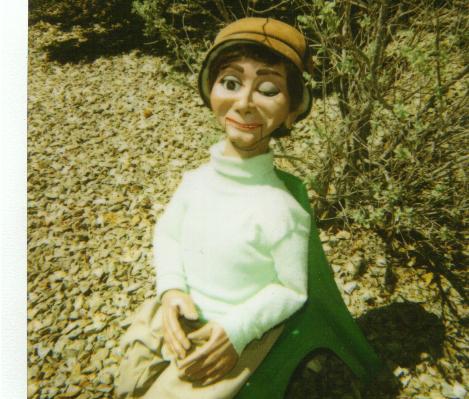
Elwood Splinter, a puppet with ADHD (Attention Deficit Hyperactivity Disorder)

ADHD and Your Family

Tuesday, July 15th, 2008

ADHD can have a multitude of effects on the entire family. To begin
with, it is not unusual for a child who has ADHD to attract
significantly more of his or her parents’ attention than the other
children receive. Just remember the old saying, “The squeaky wheel gets
oiled.” The other children can become jealous because they do not get
as much attention. They also can take advantage of the situation
because their parents are not paying close attention to them. What I
mean is that they can get away with doing wrong things because their
parents are busy paying attention to their sibling who has ADHD.

Since so many children with ADHD also have ODD, the frequency and severity of
arguing and yelling can increase significantly.
This can cause other
family members either to withdraw, become angry, or to become more
aggressive themselves. Parents of children who have ADHD frequently
feel frustrated, inadequate, guilty, exhausted, and depressed. Many of
these parents end up in psychotherapy themselves. Since children who
have ADHD are good at playing people against each other, they can cause
problems between their parents or between their siblings. Please write
to me to tell me more specific ways that a child with ADHD has affected
your family life.

drc@adhd1.net

ADHD, Oppositional Defiant Disorder, and Peace In the Family

Friday, July 11th, 2008

A high percentage of children with ADHD , particularly boys, also have Oppositional Defiant Disorder (ODD). ADHD alone can create friction within the family. ADHD, when combined with ODD, can make family life much more challenging. I have known parents who did not want to go home after work and face the frequent conflicts. Some were also concerned that if they did not go home, the problems might escalate even more. Family life with ADHD and ODD can become quite unhealthy for children and parents alike.

It is better to act than to react.
In order to improve the situation it is a good idea to have a plan in place to improve family communication and cooperation. Consequences need to be clearly stated, and parents must follow through. I also want families to have fun together and accomplish goals as a team. I want people in families to treat each other with respect.

I have created a program specifically designed to encourage more peaceful families. The program takes into account the special needs of children with ADHD. I will be presenting the program in the near future in a series of teleconferences. I hope you will be able to attend.

Sign up for our ADHD newsletter to be notified of updates, seminars, special offers and more!

To learn about our special ADHD Club, click now to www.adhd1.net/at-last-the-truth-about-adhd

Elwood’s ADHD Blog

Thursday, July 10th, 2008

Elwood, the puppet with ADHD (attention deficit hyperactivity disorder)

Today I have to go to summer school. I don’t like summer school. No, no, no, no, no, no but mom and dad say that I have to go ’cause my grades were bad. The good things about summer school, it doesn’t last very long and there’s not a lot of kids. I’m trying so I won’t have to go next year. Bye.